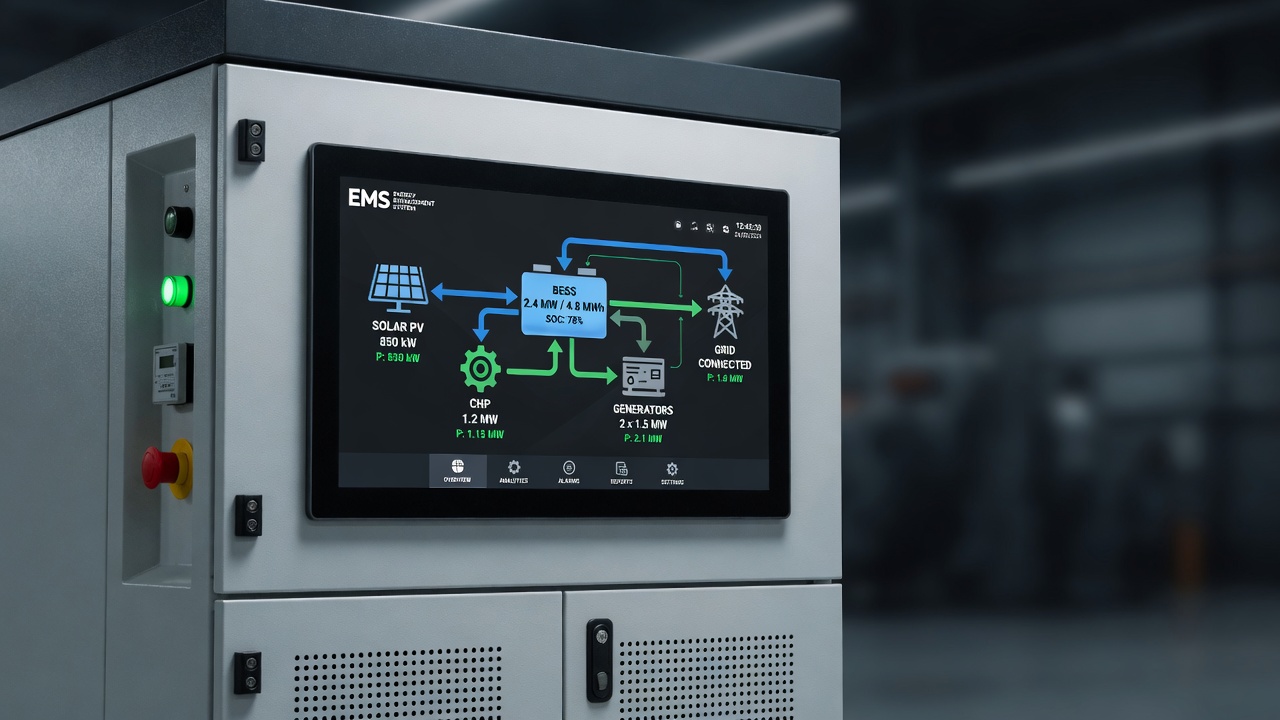
Design and integration of Energy Management Systems that optimise solar, BESS, CHP and generators into a single coordinated platform - delivering better efficiency, clearer control and improved operational performance.
Tell us about your site and energy sources.
A clear, engineering-led process from first review to live system
We design and integrate Energy Management Systems that coordinate solar, BESS, CHP and generators into a single optimised platform. The process is structured, remote-friendly where possible, and focused on practical performance.
We review your existing energy sources (solar, BESS, CHP, generators), load profile, control systems and operational goals. This can be done remotely using your drawings, single-line diagrams and operational data.
We design the Energy Management System architecture, define control strategies, and specify how solar, BESS, CHP and generators will work together. The focus is on reliable coordination and measurable performance.
We deliver the full EMS design package, control philosophy, integration specifications and support during implementation. Optional ongoing optimisation and performance monitoring can be included.
Most of the design and integration strategy work can be completed remotely. Site visits are arranged only when needed for complex or large-scale systems.
An Energy Management System is a coordinated control platform that monitors and optimises how multiple energy sources work together on a site. It is particularly valuable where solar, battery storage (BESS), CHP and generators need to operate as a single, efficient system rather than as separate assets.
The most common problems are poor coordination between generation sources, inefficient use of solar and battery storage, generators running more than necessary, and lack of clear operational visibility. An EMS brings these assets under one control strategy so they work together effectively.
Yes. This is one of the main reasons clients engage us. We design Energy Management Systems specifically to integrate new and existing assets - including solar PV, battery storage, CHP units and generators - into a coordinated operating strategy.
Not necessarily. In many cases we can work with existing controllers and add a higher-level Energy Management System that coordinates the overall site. We assess this during the initial review and recommend the most practical approach.
Most of the design and integration strategy can be completed remotely using your existing drawings, single-line diagrams, load data and system information. Site visits are only arranged when the complexity of the installation requires it.
Typical deliverables include the EMS control philosophy, system architecture, integration specifications, interface requirements, and a clear operating strategy. We can also support implementation and provide ongoing optimisation if required.
No. While large sites benefit significantly, commercial sites with a mix of solar, battery storage and backup generation also gain clear value. The key factor is whether you have multiple energy sources that need better coordination.