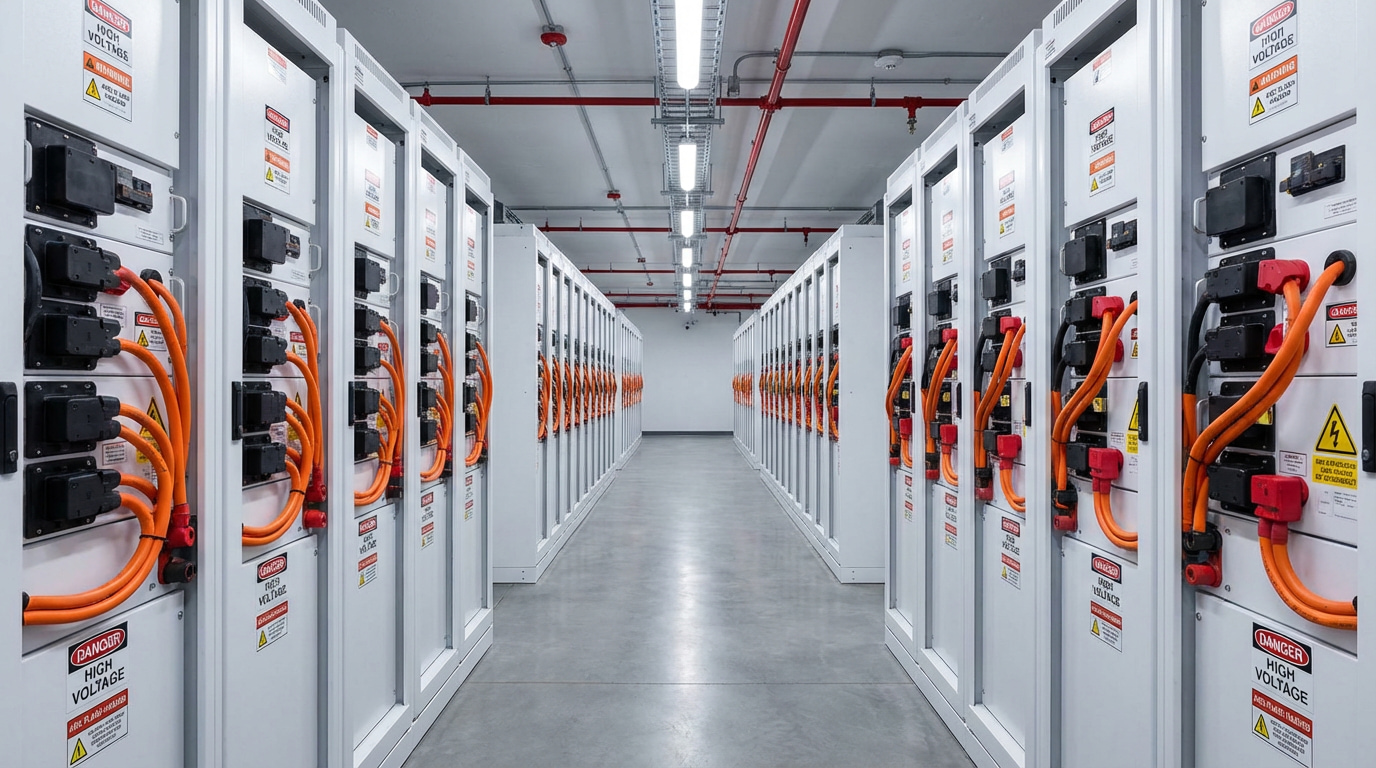
A Maximum Import Capacity upgrade can cost six figures and take years. We engineer behind-the-meter BESS systems that handle your peak demand today — protecting your grid agreement and keeping your facility running.
Behind-the-Meter BESS & Peak Demand Management
Your Maximum Import Capacity is the electrical ceiling agreed with ESB Networks for your site. When your operations push against that ceiling — through new machinery, expanded production, or EV fleet charging — the conventional answer is an expensive, multi-year MIC upgrade application. SMC Energy provides an alternative: a precisely engineered Battery Energy Storage System (BESS) that sits behind your meter, absorbs peak demand events, and keeps your import profile safely within your existing MIC. No grid application. No years of waiting. No six-figure network reinforcement costs.
Engineered for Your Specific Load Profile
Every MIC optimisation project begins with a detailed load profile analysis. We identify your demand peaks, size the BESS accordingly, and design a system that integrates cleanly with your existing electrical infrastructure.
We analyse your site's half-hourly demand data to pinpoint exactly when and why you approach your MIC threshold — then size the BESS to address those specific peaks with precision.
The BESS discharges automatically during demand peaks, keeping your grid import below your MIC limit. Avoid excess capacity penalties and protect your existing connection agreement.
The same BESS system can be configured to provide seamless Emergency Power Supply for critical loads during a grid outage — maximising your return on a single capital investment.
Your MIC is the maximum level of electricity your site is permitted to import from the ESB Networks grid at any given time, as agreed in your connection agreement. Exceeding it triggers excess capacity charges and can lead to penalties. Increasing your MIC requires a formal application to ESB Networks and can involve expensive network reinforcement works and multi-year lead times.
A behind-the-meter Battery Energy Storage System (BESS) is charged during off-peak periods when grid demand is low. During peak production or operational periods when your site approaches its MIC ceiling, the BESS discharges to supplement grid supply. This 'peak shaving' keeps your import below the MIC threshold, avoids excess capacity charges, and provides operational headroom without any changes to your grid connection agreement.
MIC upgrade timelines through ESB Networks vary significantly depending on the level of network reinforcement required. Minor MIC increases on an existing network may take 12–18 months. Larger increases requiring substation upgrades or new cable infrastructure can take 3–5 years and cost anywhere from tens of thousands to several hundred thousand euros. A BESS solution can be engineered and installed within months, at a fraction of that cost.
Any business with significant and variable electrical loads is a candidate. Common sectors include food and beverage processing, cold storage and logistics, manufacturing with high-draw machinery, agricultural processing, EV fleet charging operations, hotels and large hospitality venues, and data centre facilities. The key trigger is a site that either regularly approaches its MIC limit or wants to add new load — such as EV chargers or new production equipment — without the cost or delay of a formal MIC upgrade.
Yes. The same BESS infrastructure used for peak shaving can be configured to provide Emergency Power Supply (EPS) functionality for critical loads during a grid outage. SMC Energy designs systems that serve both functions simultaneously, maximising the return on the capital investment.